AT-R.3 / Research / 2025
Cupidastic (Research ver.)
Future Research / Algorithmic Intimacy
A research-led design project investigating how microplastic toxicity, endocrine disruption, declining fertility, and AI-mediated intimacy may reshape future love.
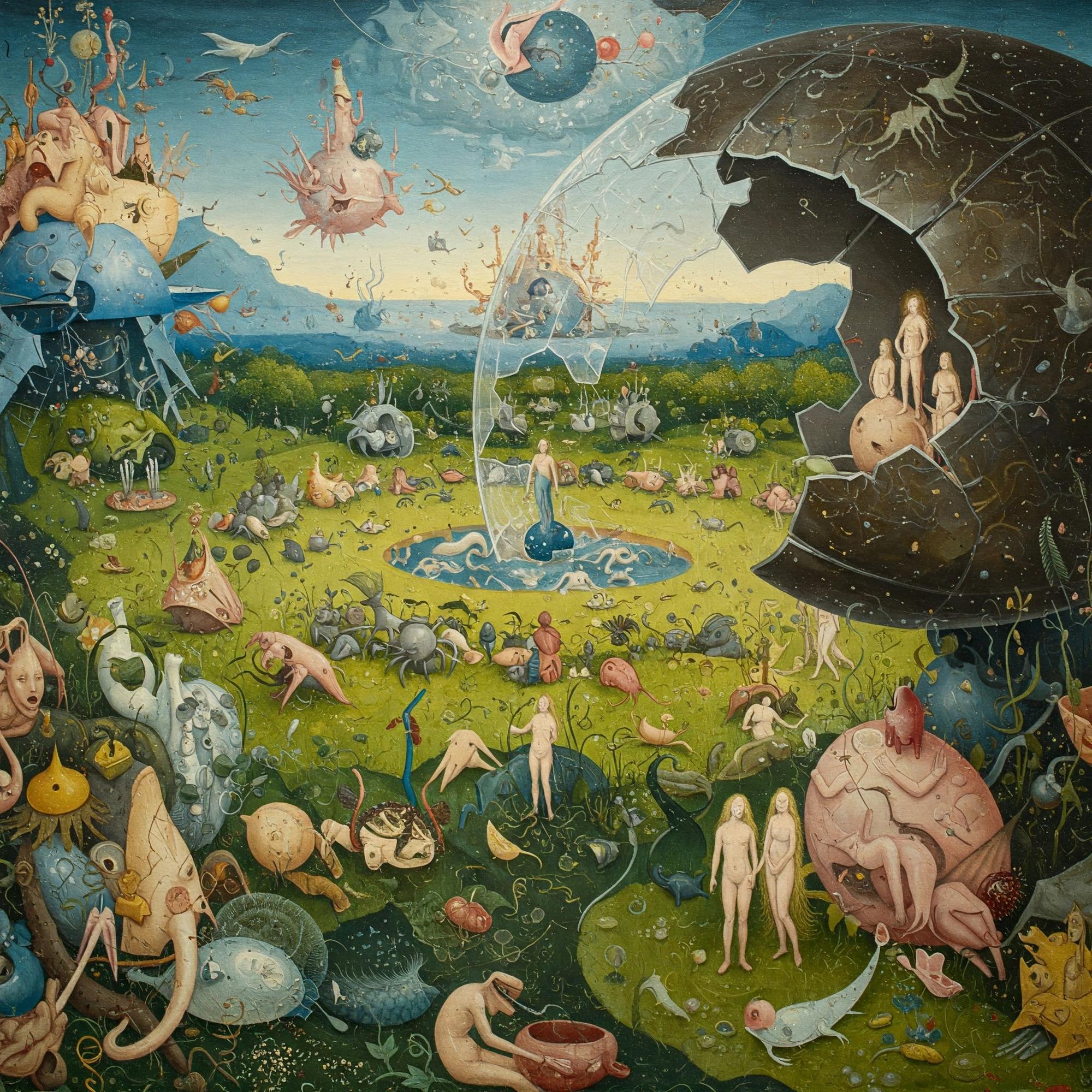
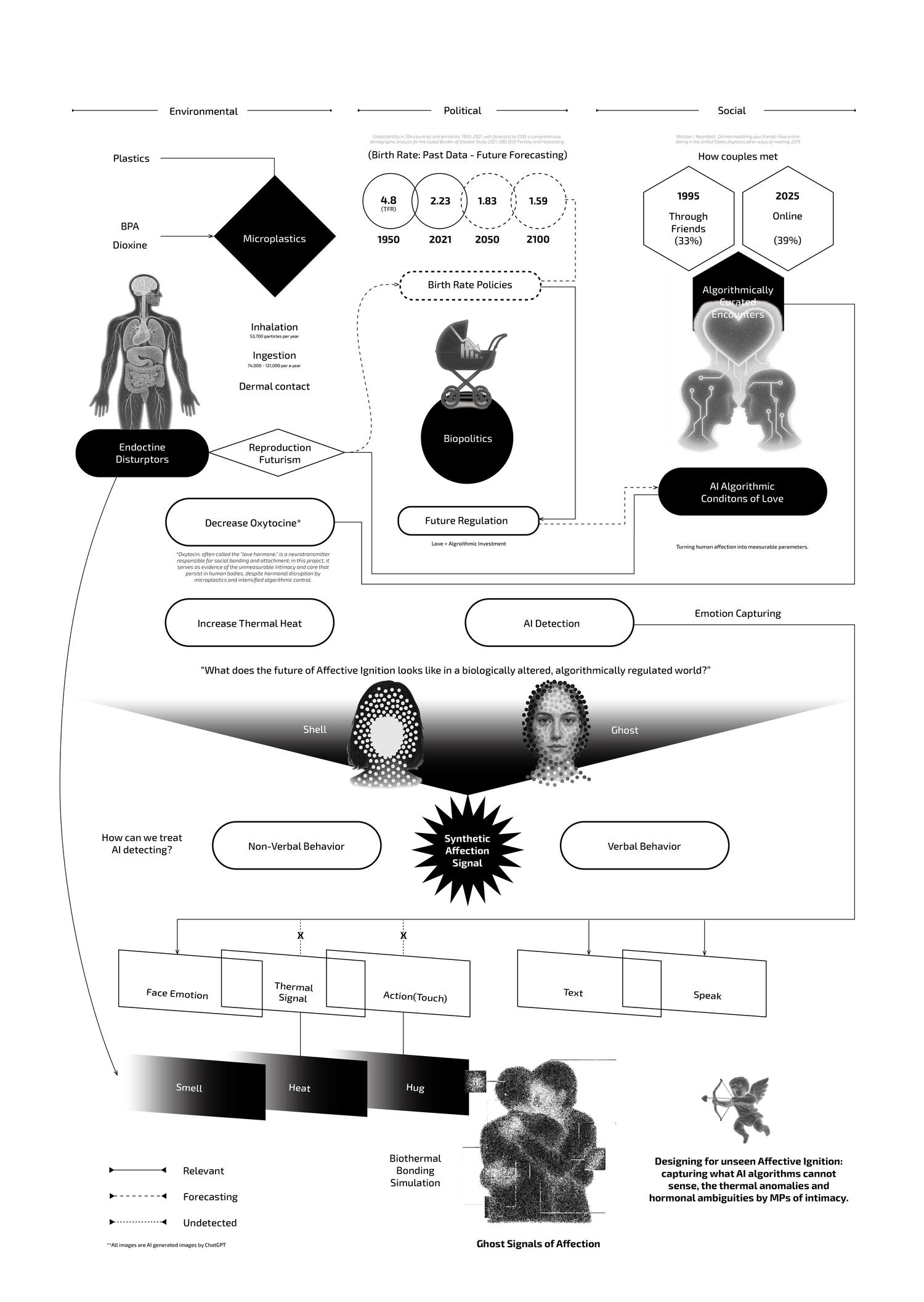
[Figure 1_AI generative image of the 'Reproduction Futurism in Microplastics Age'] [Figure 2_A diagram that visualizes the Problem Framing through Worldbuilding] ]

Research Overview
Cupidastic investigates how environmental toxicity, reproductive uncertainty, and algorithmic intimacy may converge into a future condition where love becomes biological, measurable, and governable.
The project began from a contradiction. While future technologies increasingly promise prediction, optimisation, and personalised decision-making, love remains valuable precisely because it resists full prediction. If the future were always clear, there would be no need for forecasts. In the same way, uncertainty is not only a source of anxiety, but also the condition that allows preferable futures to be imagined.
This research links microplastics, endocrine disruption, declining fertility, AI matchmaking, and emotional biometrics into one speculative problem framing. Rather than treating these issues as isolated topics, the project reads them as overlapping signals of a future in which human bodies become chemically altered, socially scored, and increasingly mediated by algorithmic systems.
Within this context, Cupidastic asks what forms of love, care, and human unpredictability might remain when intimacy becomes something that can be tracked, recommended, and optimised.
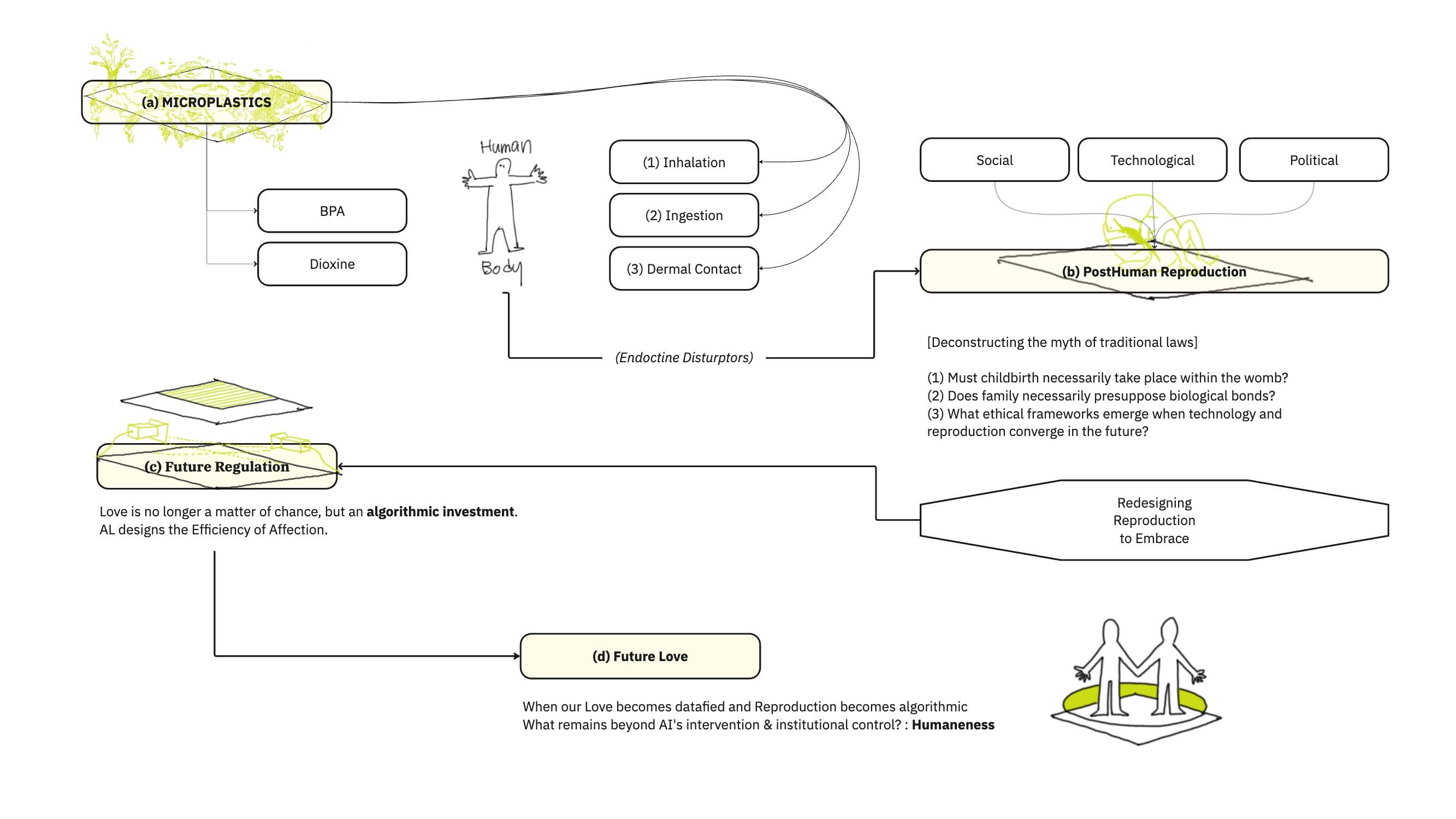
[Figure 3_A diagram that translates the Research into a defined Problem Framing]
Problem Framing
Microplastics are increasingly understood not only as environmental pollutants, but also as contaminants that accumulate within human tissues, endocrine systems, and reproductive organs. Their accumulation within human tissues, endocrine systems, and reproductive organs suggests a slow transformation of biological conditions.
The research focuses on how microplastic-induced hormonal disruption may reshape ideas of reproduction, attraction, and care. Endocrine-disrupting substances such as BPA, phthalates, and dioxins are treated not only as environmental risks, but as forces that may alter the affective and reproductive body. In this speculative framework, reproduction is no longer only genetic, cultural, or political. It becomes entangled with plastic particulates, synthetic materials, and long-term hormonal instability.
The project is structured through four connected layers: microplastic futures, reproduction futurism, future biopolitics, and future love tracking. These layers move across macro scales of state regulation, meso scales of reproductive infrastructure, and micro scales of bodily heat, endocrine fluctuation, and emotional opacity.
Through this framing, Cupidastic Research asks not simply how reproduction might change, but what kinds of unplanned attraction, unreadable love, and reproductive non-events might persist outside algorithmic systems.
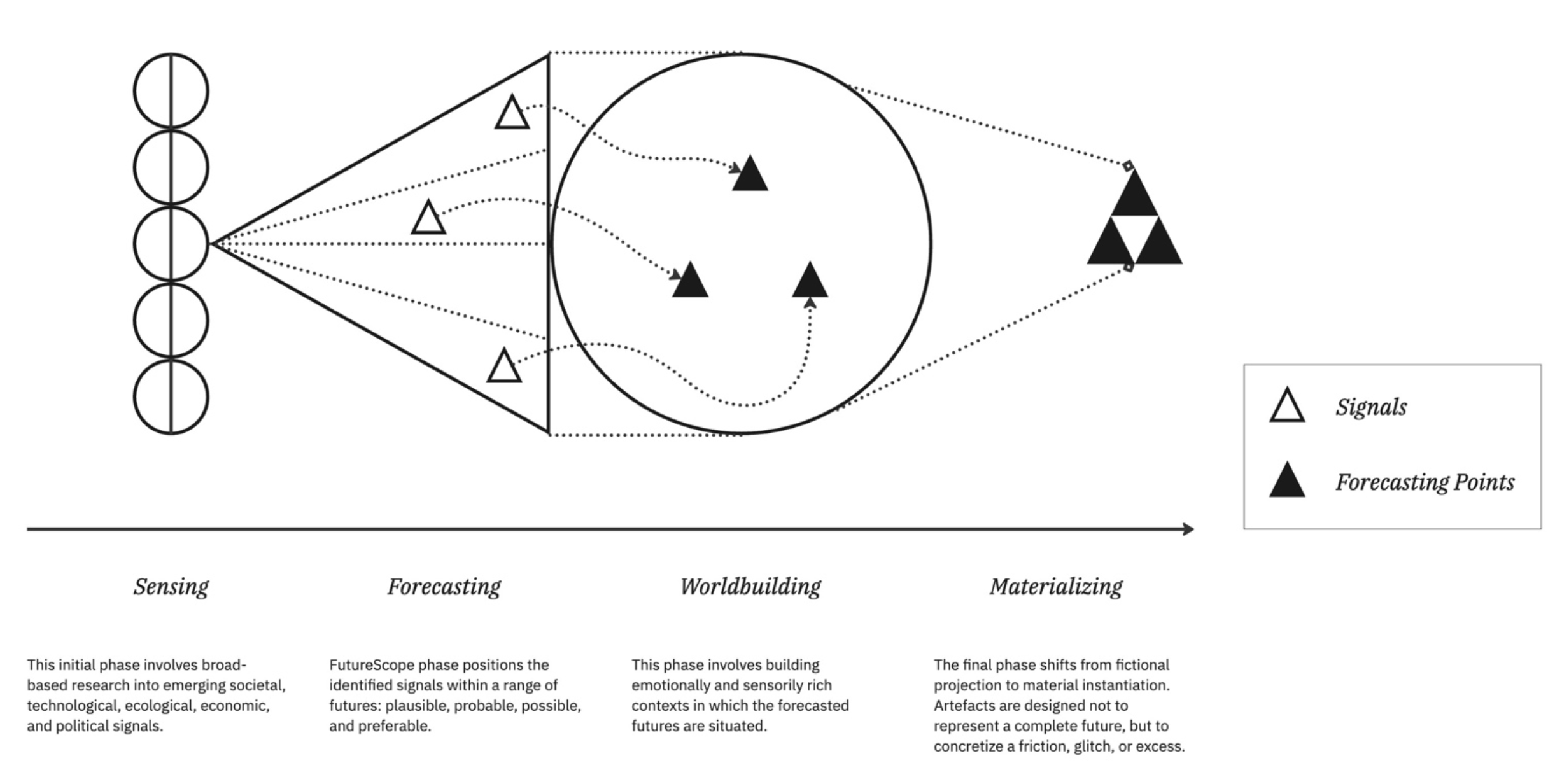
[Figure 4_A newly structured diagram of future methodologies, reinterpreted from those used in this project, Hanna Park (2025)]
Methodology
The project uses a speculative research methodology structured around four stages: sensing, forecasting, worldbuilding, and materialising.
Sensing began with interdisciplinary research into microplastic toxicity, reproductive health, algorithmic surveillance, emotional biometrics, and posthuman theory. Tools such as STEEP, PESTLE, weak signal analysis, annotated literature review, and visual mapping were used to locate early signals across environmental, social, technological, and anthropological domains.
Forecasting translated these signals into possible, plausible, probable, and preferable futures. Rather than using forecasting to predict a single outcome, the process was used to map emotional, ecological, and political stakes. The Futures Cone and scenario mapping helped position microplastic accumulation, declining fertility, and AI-mediated intimacy within longer temporal frames.
Worldbuilding then transformed these future conditions into narrative systems. The research developed speculative characters, public infrastructures, dating protocols, reproductive certificates, and love-compliance scenarios to make the future emotionally inhabitable rather than purely abstract.
Finally, materialising translated this world into artefacts, interfaces, and embodied interactions. Thermographic imagery, GSR-based affective sensing, recycled leather, hugging gestures, and wearable forms were explored as ways to visualise emotional signals while preserving ambiguity.
These speculative methods were complemented by primary research, including expert interviews and embodied workshops, to examine the scientific grounding and experiential dimensions of the research questions.
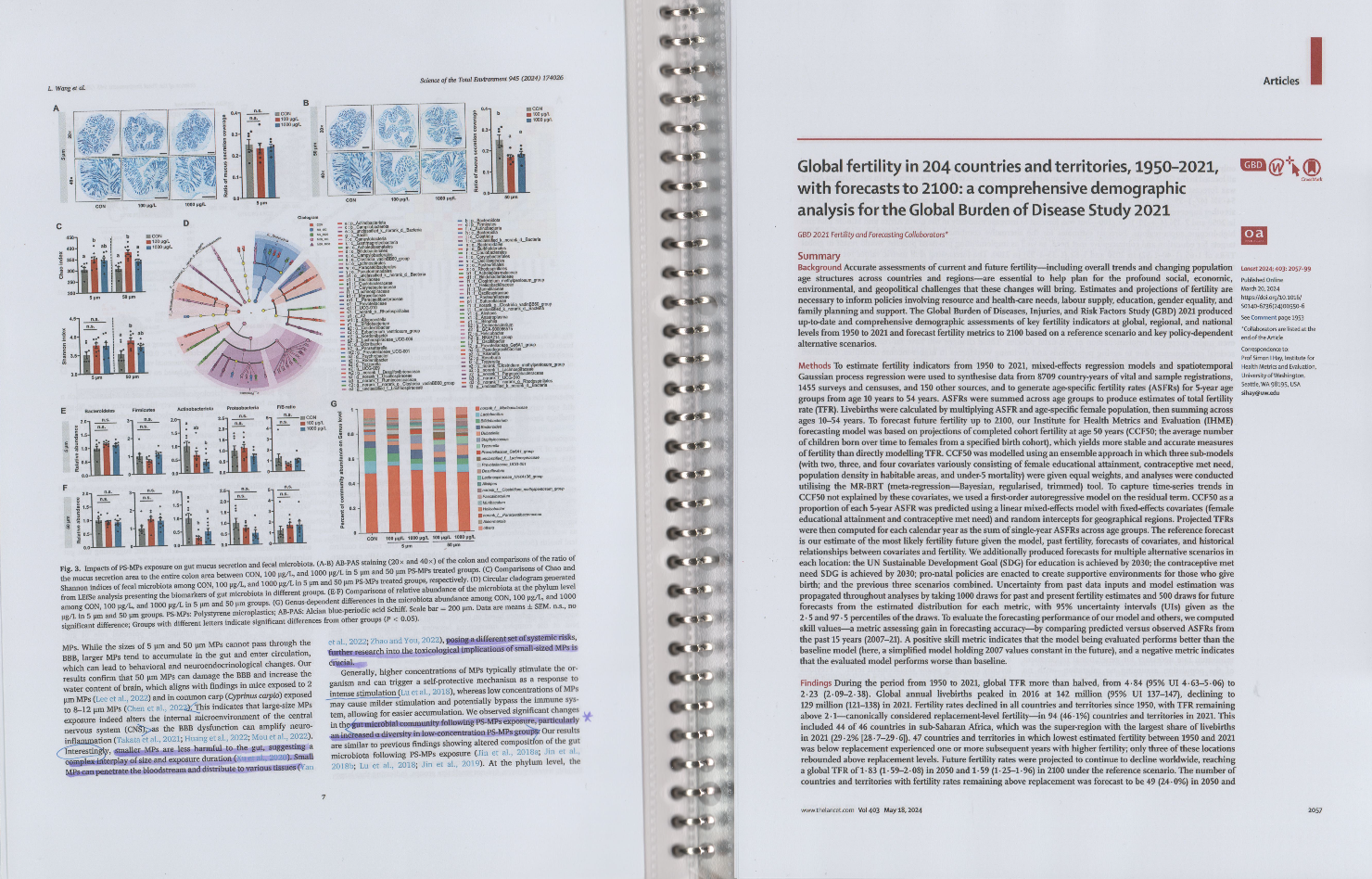
[Figure 5_ attatched photo of Hume.ai workshop at RCA, 2025] [Figure 6_ Researches about the ‘Microplastic-Oxytocine’ and ‘Global future fertility’ Forecasting (Wang, L. et al. (2024) 'Exposure to polystyrene microplastics reduces sociality and brain oxytocin levels through the gut-brain axis in mice,' The Science of the Total Environment, 945, p. 174026.), (Global fertility in 204 countries and territories, 2021)]
Primary Research
To ground the project in both scientific evidence and lived experience, the research combined an expert interview with embodied primary research.
An interview with Dr Stephanie Wright (Imperial College London), an environmental toxicologist specialising in microplastic exposure and human health, was conducted to discuss the biological assumptions underpinning the project, the current limitations of scientific evidence, and future ethical considerations surrounding environmentally mediated changes in human relationships and reproduction.
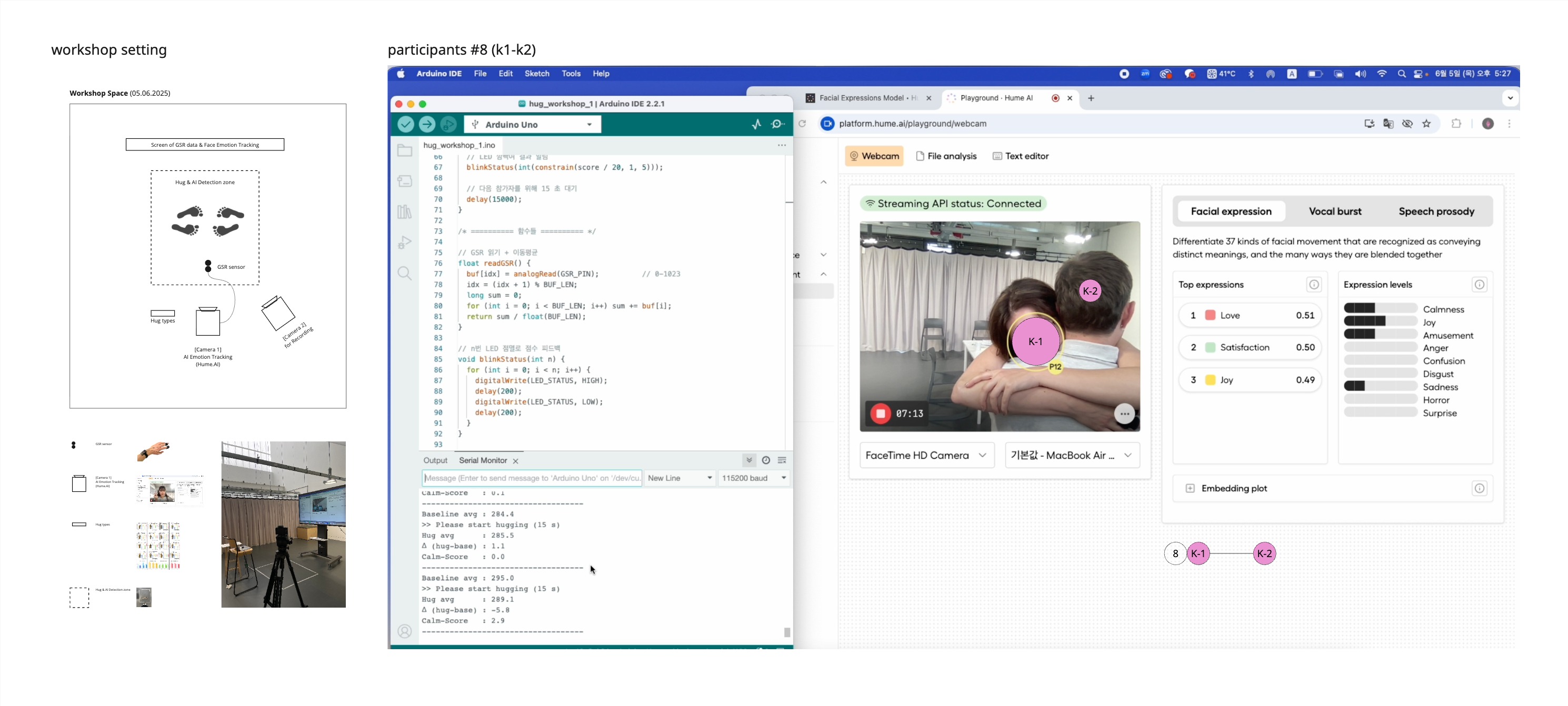
Alongside this expert interview, an exploratory workshop investigated how contemporary sensing technologies interpret intimate interactions through physiological sensing, AI-assisted facial expression analysis, and behavioural observation.
Twelve participants with different interpersonal relationships — including acquaintances, randomly assigned pairs, and romantic couples — completed a series of structured hugging exercises while galvanic skin response (GSR), camera-based facial-expression data (Hume.AI), observational notes, and post-session reflections were collected. By combining physiological measurements with qualitative observations, the workshop generated a multimodal dataset that informed the subsequent design process.
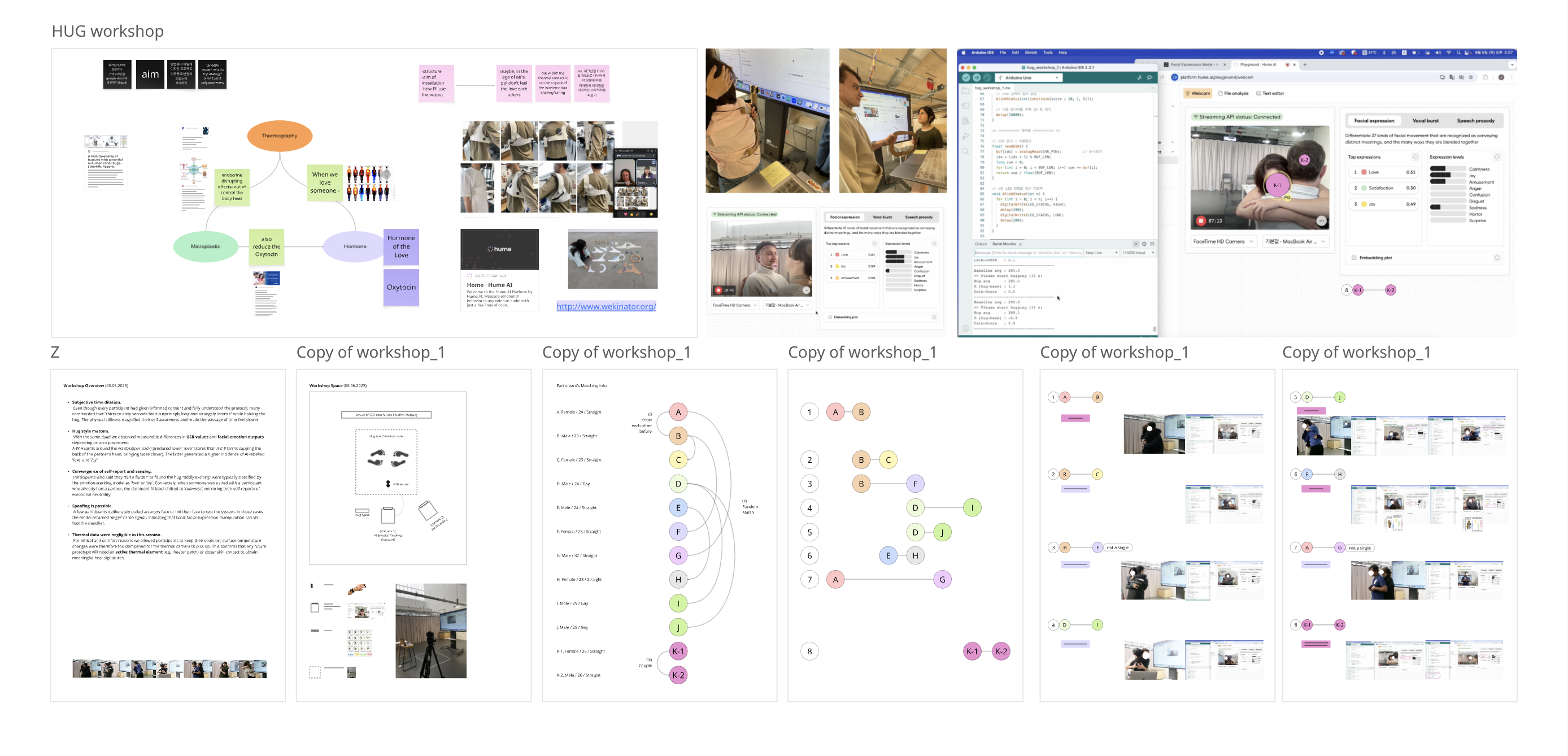
The workshop revealed several observations that directly informed the design process.
Variations in hugging behaviour produced different physiological responses and computational interpretations, suggesting that intimate interactions remain highly contextual despite becoming increasingly measurable.
Participants also expressed concerns regarding emotional biometric privacy, while technical limitations in passive thermal sensing motivated the incorporation of active thermal feedback into later prototypes.
Rather than seeking to measure love itself, the research examined the boundaries of what contemporary sensing technologies can and cannot interpret, positioning emotional ambiguity as a critical design value rather than a technical limitation.
Research Findings
The research converged around three interconnected findings.
- Biological evidence
emerging biological evidence suggests that microplastic exposure may influence hormonal regulation associated with social behaviour and reproduction. Studies such as Wang et al. indicate a possible relationship between polystyrene microplastics, oxytocin dysregulation, and reduced social interaction in animal models. Rather than treating this as a prediction of human behaviour, the project adopts these findings as an early scientific signal for imagining future environmental conditions that may reshape human intimacy.
- Computational legibility
both the literature review and the primary research suggest that emotional interactions are becoming increasingly computationally legible. Physiological sensing, facial-expression analysis, and behavioural observation demonstrated that certain aspects of intimacy can already be translated into measurable data, while remaining highly dependent on context, bodily variation, and interpersonal relationships.
- Emotional ambiguity
the research identified emotional ambiguity as a critical value rather than a technological limitation. Participants consistently questioned who should have access to affective data and whether intimate experiences ought to become measurable at all. These concerns shifted the project towards broader questions of emotional privacy, affective data sovereignty, and the preservation of uncertainty within future AI-mediated relationships.
Together, these findings shifted the project from asking how intimacy can be measured to questioning what aspects of intimacy should remain beyond measurement.
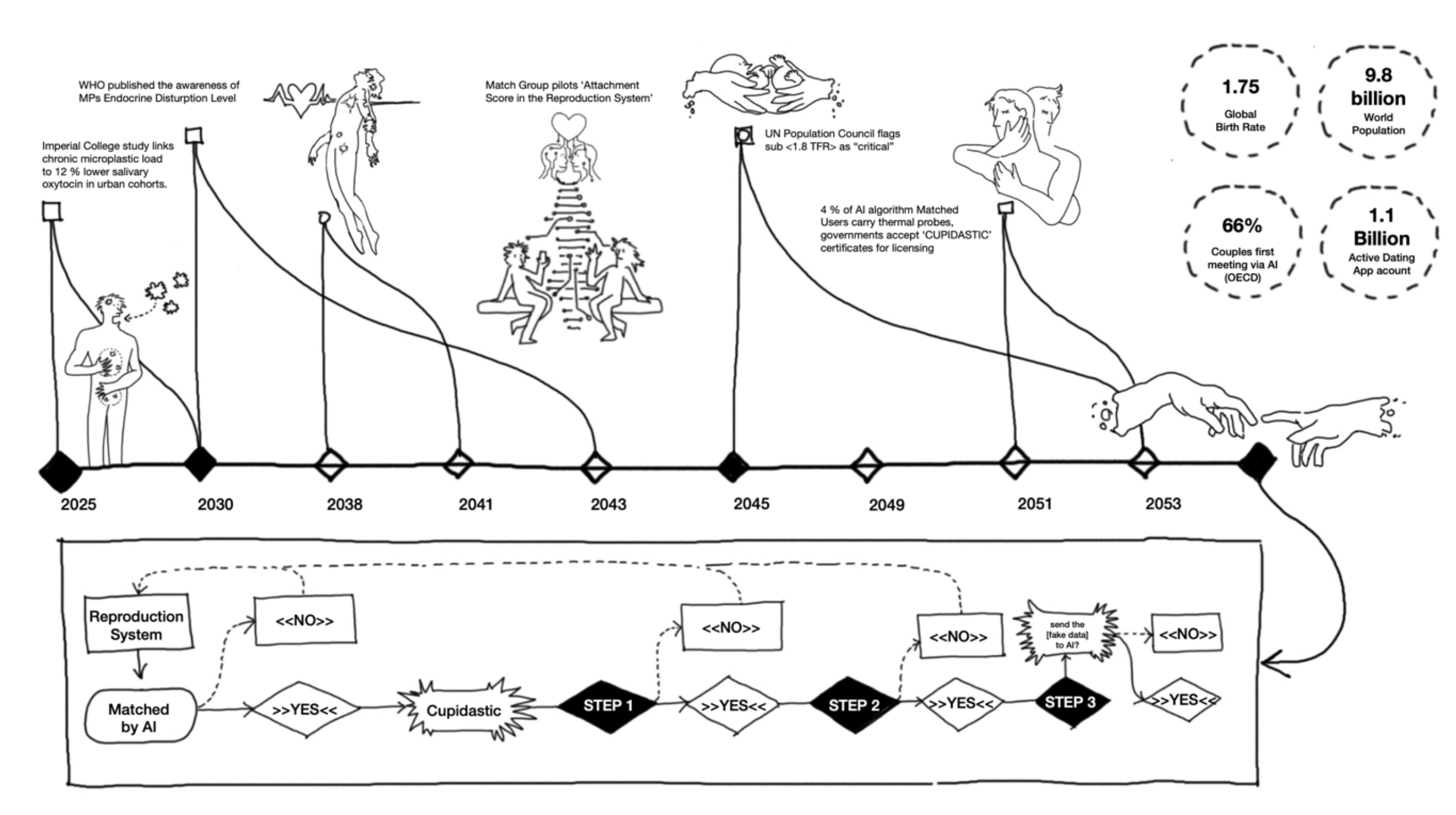
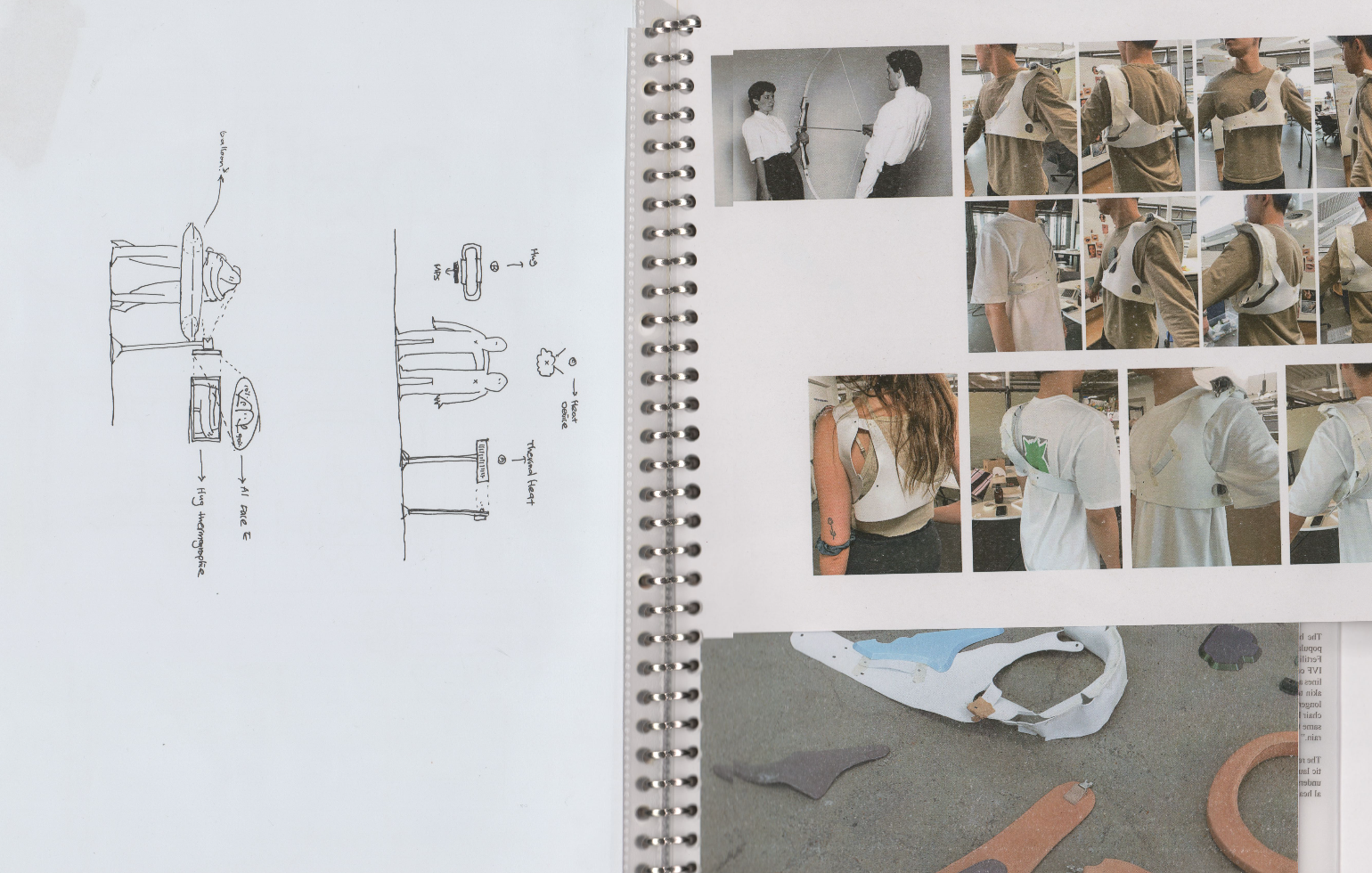
[Figure 6_Future scenario sketch and Cupidastic system algorithm,2025]
Future Scenario
The scenario imagines a future in which microplastics are reclassified as endocrine-disrupting ambient pollutants and daily polymer counts become as normal as pollen or UV indexes.
As reproductive anxiety grows, dating platforms move from personality-based matching to biological compatibility scoring. Wearables, fertility clinics, and AI matchmaking systems begin to produce oxytocin indexes, hormone scores, and reproduction certificates. Love becomes a dashboard metric, while the right to reproduce becomes tied to chemical status and algorithmic legibility.
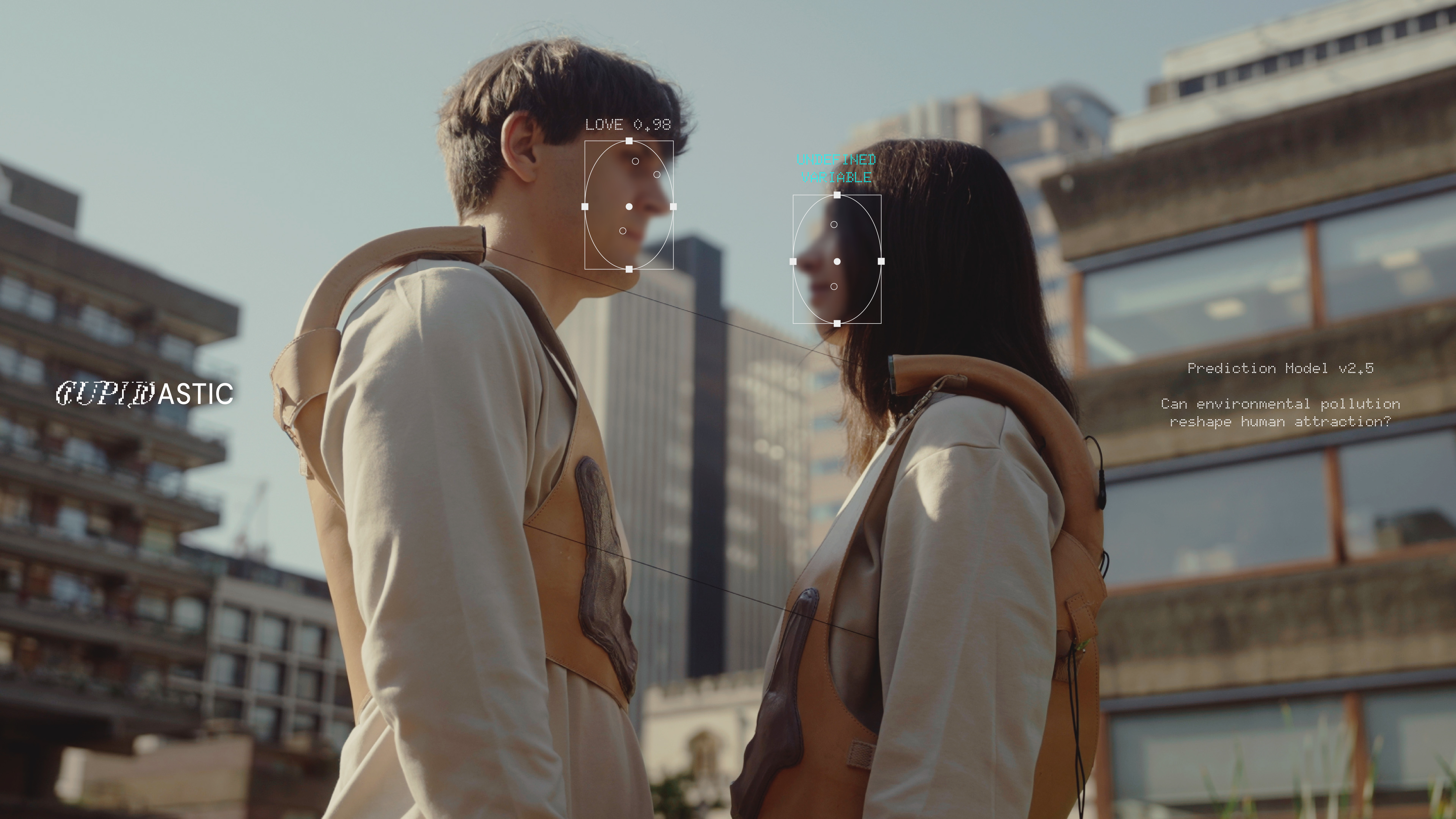
Within this world, Cupidastic emerges as a system for generating positive prediction errors. Users wear a vest-and-handle kit that produces thermal and physiological signals between consenting individuals. These signals create moments of attraction that are perceptible to each other, but difficult for algorithmic systems to fully classify.
The scenario does not propose a technological solution to microplastic toxicity or declining fertility. Instead, it asks whether human unpredictability can remain a form of resistance inside systems designed to optimise intimacy.
[Figure 7_ Ghost Signals: Designing Synthetic Love Ignition of Microplasticene, Hanna Park, Royal College of Art, 2025]
Research to Object
This research became the conceptual foundation for the Cupidastic wearable system.
The object version of Cupidastic translates the research into a hug vest, sensing handles, material studies, and a speculative scenario film. While the object page focuses on the final artefact and interaction, this research version shows the underlying logic: how environmental toxicity, hormonal disruption, reproductive governance, AI matchmaking, and emotional privacy were connected into one future system.
Cupidastic Research therefore operates as the project’s worldbuilding engine. It defines the conditions under which the object becomes meaningful, and asks what kinds of love might still survive when both bodies and emotions become increasingly available to measurement.
APPENDIX
Contributors
Researcher — Hanna Park
Designer / Scenario — Hanna Park
Lead Professor — Dr. Nazli Terzioglu (Royal College of Art)
Key image video director — Jin Roh
Scientific Consultant — Dr Stephanie Wright (Imperial College London)
Literature
Baylis, F. (2019). Altered Inheritance: CRISPR and the Ethics of Human Genome Editing. Harvard University Press.
Chen, J.Y. & Zhu, H. (2019). Artificial intelligence in healthcare: Past, present and future. Seminars in Cancer Biology.
Couldry, N. & Mejias, U.A. (2019). The Costs of Connection: How Data Is Colonizing Human Life and Appropriating It for Capitalism. Stanford University Press.
Descartes, R. (1641). Meditations on First Philosophy.
Dunne, A. & Raby, F. (2013). Speculative Everything: Design, Fiction, and Social Dreaming. MIT Press.
Frontiers in Endocrinology. (2022). Microplastic exposure and endocrine disruption. Available at: https://www.frontiersin.org/articles/10.3389/fendo.2022.1084236/full
Galloway, T.S. & Lewis, C.N. (2016). Marine microplastics spell big problems for future generations. Proceedings of the National Academy of Sciences, 113(9), pp.2331–2333.
Haraway, D.J. (2016). Staying with the Trouble: Making Kin in the Chthulucene. Duke University Press.
Krell, D. & Smith, L. (2021). Algorithmic Intimacy and the New Politics of Reproduction.
Lewis, S. (2019). Full Surrogacy Now: Feminism Against Family. Verso Books.
Liang, A. (2025). Artificial Intelligence Clones. [Forthcoming].
Lupton, D. (2016). The Quantified Self: A Sociology of Self-Tracking. Polity Press.
Malicse, A. (2025). The Future of Human Reproduction and Family Structure. [Forthcoming].
National Library of Medicine. (2023). Effects of Microplastics on Human Fertility. Available at: https://www.ncbi.nlm.nih.gov/pmc/articles/PMC9885170/ (Accessed: 5 May 2025).
Preciado, P.B. (2013). Testo Junkie: Sex, Drugs, and Biopolitics in the Pharmacopornographic Era. The Feminist Press.
Schmeer, J. (2014). Bioplastic Fantastic: Between Products and Organisms.
Sharon, T. (2018). When digital health meets digital capitalism: Reinventing care in the algorithmic age. Big Data & Society.
Strathern, M. (1992). Reproducing the Future: Anthropology, Kinship and the New Reproductive Technologies. Routledge.
World Health Organization. (2019). Microplastics in Drinking Water.
Zuboff, S. (2019). The Age of Surveillance Capitalism. PublicAffairs.
Gila Stopler, 'Biopolitics and Reproductive Justice: Fertility Policies between Women's Rights and State and Community Interests' (2015)
Timothy Morton (2013), Hyper Object
Barbara E. Gibson(2020), The micro-politics of caring: tinkering with person-centered rehabilitation, Taylor&Francis group